The Walnut Street Hotel: A Cornerstone of Bloomington’s Heritage
Nestled at 120-124 North Walnut Street on the northeast corner of the downtown courthouse square, The Walnut Street Hotel—also historically recognized as The Walnut House, The Commercial Hotel, The Faulkner House, and The Faulkner Hotel—stands as a testament to Bloomington, Indiana’s rich architectural and communal downtown heritage. This enduring structure, erected in 1840’s as evidenced by the original limestone date block elegantly set within its brick façade, has been a silent witness to the city’s unfolding story for well over a century.
Throughout the decades, the Walnut Street Hotel has served as far more than just a place of lodging. It has been an indispensable resource for the Bloomington community, offering weary travelers a comfortable bed, locals and visitors alike a hearty meal, and a welcoming setting for lively table-side discussions. Its spacious rooms and inviting public areas have also provided fertile ground for enterprising individuals to launch and manage their businesses, making the building a vibrant center of both hospitality and commerce.
The purpose of this page is to delve into the fascinating history of the Walnut Street Hotel—tracing not only the architectural evolution of the building itself but also the dynamic stories of those who have owned, inhabited, and enlivened its halls. By exploring the shifting purposes and personalities that have animated this landmark, we aim to honor its legacy as an enduring pillar of Bloomington’s downtown and a cherished gathering place for generations.
Walnut Street Hotel: The Construction
The Existing Property
The property in question is situated on In-Lot #191, according to historical deed records housed at the Monroe County Indiana History Center. While it is a common assumption that the Faulkner family owned and operated the premises—especially given that the building has borne the name “Faulkner House”—this is not supported by the earliest deed records. Although it is possible that the Faulkner family assumed ownership at a later date, my research focuses primarily on the period of the structure’s original construction. Notably, none of the records from around 1847 indicate any association with the Faulkner family.
The only information that I could locate for the original structure was on the Bloomingpedia website that stated the building was built by Aquilla Rogers. However, there has been no known information in my findings to support that statement and welcome any substantial evidence. The only evidence of this would be that Aquilla was a builder in the area, just as there were multiple grocers in the area.
The documented chain of ownership for the property, and thus for the construction of the building now known as the Walnut Street Hotel, is as follows:
• 1828: Addison Smith conveyed the property to William and Sarah Batterton.
• 1840: William and Sarah Batterton sold the property to Sarah Williams.
• 1841: Sarah Williams sold the property back to William and Sarah Batterton.
• 1844: William and Sarah Batterton again sold the property, this time to Jonathan Moore.
• 1857: The Estate of Jonathan Moore sold the property to Alexander M. Murphy.
Clarifying the exact identity of the individual or individuals who commissioned the construction of the Walnut Street Hotel (alternatively known as the Faulkner House) remains a challenge. The only additional reference found regarding William Batterton is an 1840 advertisement for his saddlery business. Meanwhile, records show that the estate of Sarah Williams (who passed away in 1882) pertaining to Lot #264 was auctioned publicly, but this does not correspond to the lot in question.
Jonathan Moore then purchased the property from William and Sarah Batterton in 1844. He would occupy the structure as listed further below. The earliest mention of the actual structure is in 1854 during the estate sale of Jonathan Moore which stated that the structure was a large brick building…that’s it!
The Existing Structure
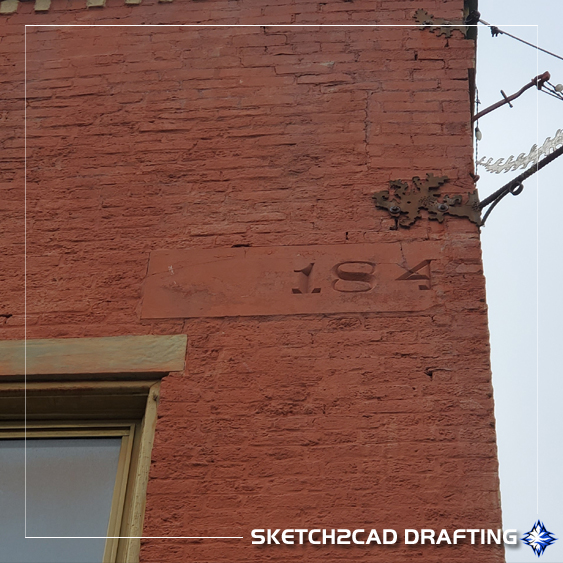
My efforts to determine the actual date of the building’s construction rely in part on the existing limestone date block, which still adorns the north façade of the current structure at a height of approximately 20 feet at the corner. While the keystone has suffered damage over time—most notably the loss of the final numeral at the end of the date, possibly due to weathering, vandalism, or simple wear and tear—the block clearly commemorates a year in the 1840’s. It is worth noting that date stones are typically placed centrally on a facade to protect them from such damage.
A date block carved into stone, commonly seen on masonry facades from the 1800s and early 1900s, served to mark the year a building was constructed or significantly renovated. These date blocks did more than record time—they reflected the builders’ pride in their work and highlighted the building’s historical importance. There are some buildings around town recently erected that have date blocks on the ground level, however they are nothing but mere arrogance.
Given that the stone was inscribed with the date 1847, it follows that the exterior walls would have been erected by that time. These walls are composed of two or three interlaced layers of brick, known as wythes, which create a robust structure with an estimated four-hour fire rating. This type of masonry is the reason so many substantial brick walls from older downtown buildings are still standing today—they are highly fire-resistant, though susceptible to water infiltration and deterioration if not properly maintained. Construction would have commenced with the laying of a local Indiana limestone foundation, followed by the exterior and interior brick walls, before interior partitioning and finishing were completed. Based on available evidence, it is reasonable to estimate that construction began sometime between 1840 and 1844, allowing for several years of planning and building by local contractors.
The Walnut Street Hotel measures approximately 86 feet in width and 66 feet in depth, featuring a three-wythe brick shell and a flat membrane roof. Historical photographs from 1891 reveal that the original roof was pitched, consistent with residential architectural norms of the time, but was later replaced—sometime after the early twentieth century—with a flat roof. Despite these changes, the building’s present form closely resembles its appearance over a century ago. The window openings on the second floor appear largely original, though they have been updated with modern, energy-efficient replacements. Intriguingly, remnants of the original windows remain embedded in the interior brickwork, as observed during recent measurements.
On the ground floor, the storefronts at 120 and 122 North Walnut retain much of their historic character, while the corner storefront at 124 has undergone more significant alteration. Historically, all three storefronts featured central, covered entrance halls framed by glass display windows on raised platforms—a design intended to entice passersby with attractive merchandise displays. Between 2003 and 2007, however, the original entrance at 124 was replaced with a modern aluminum storefront, featuring a flush glazed façade and a door at the southern end. The reasons for this alteration are unknown, but this is the building’s current configuration.
The Sixth Street façade has seen less dramatic change and remains similar to its 1960s appearance, with primary window openings intact. These have been subdivided into several storefront units, with an additional exit door added at the far end of the 124 commercial space. A new door, south of the 124 space, provides a secondary exit for the upper floor units to comply with commercial building codes.
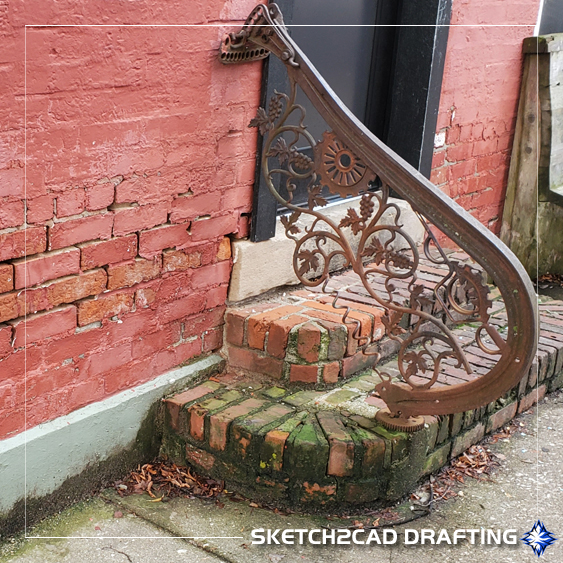
At the southernmost end of of the building along Sixth Street, there is another exit door and a set of double-hung windows—the latter a recent addition, while the door appears original. The two entrances furthest back towards the alleyways is accompanied by brick steps and metal guards, likely artistically crafted from steel machinery components such as a clutch plate, gears, springs, and ornamental grapevine motifs. More than likely the building owner contracted a local artist to fabricate this.
This is going to be like one of those modern games where you have to look to find the pieces shown on a big picture, similar to a where’s Waldo type game. In order to help break down all of these items down within the metal art I consulted my father-in-law who was familiar with them from his past. For the guard at the stairs:

A: Backbone of a horse drawn plow. Attached to the wall is where the chain is the knuckle where you would attach a chain back to the draw-bar of the team of horses.
B: Seeder Plate. In farm machinery there are different dials for each size of seed ie: corn, peas, beans, etc. Each plate is different and the spacing of the seed is calculated based on the spacing of the openings on the outside that look like gear teeth. We still use these mechanisms today in planters, they may be of different materials but basically the same. This plate sat in the bottom of a seed storage box and as the wheel on the planter moved, a set of gears would be attached to the wheel and to the planter box transferring the energy. When the seed fell into the outer ring of holes, it would then correspond with the hole in the bottom of the planter and one seed would fall to the ground in your furrow. Years back I purchased a smaller form factor residential model and the same theory applies, the invention is quite remarkable from a farming standpoint.
C: This is another seeder plate cut in half. There’s a small handlebar section below it, not really sure what that was used for but it wasn’t for a bicycle.
D: Auger Screw. You would screw into the ground and then attach a rope or chain into to hold something in place. For example, screw this into the ground and attach a goat with a leader rope to it and it will stay in one spot to eat the grass in a circle.
The rest of the material is just steel ornamental grape vine and leaves possibly from a gate.
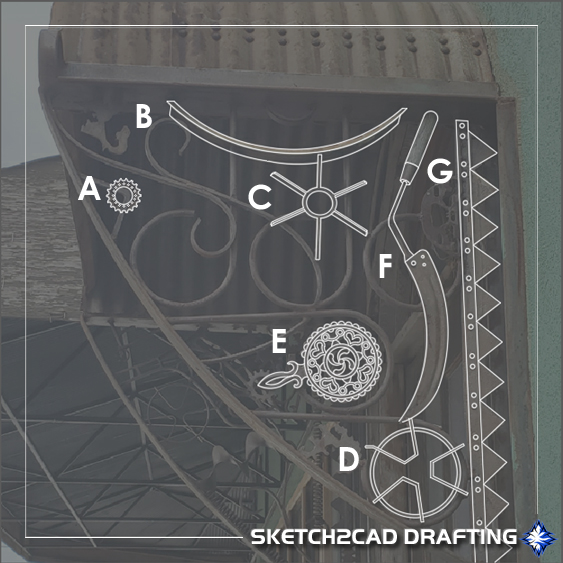
For the canopies there’s an arched piece of corrugated steel that’s used, this may have been from an old corn crib.
A: Random Sprocket
B: Wheel Rim. Made of a different metal than the other items.
C: Riser/Burner Plate for a range or wood fired stove. Years ago people had cast iron wood burning ranges in their kitchens with cover plates that you could remove and insert burner plates over the opening.
D: Another variant of a Riser/Burner Plate for a stove.
E. Ornate Trivet. This is used to place between a hot pan and the kitchen table so the table doesn’t burn from heat transference.
F: Corn Knife. This appears to be a variant of a sickle scythe where instead of a rounded handle it’s straight.
G: Bar of teeth to a horse-drawn mower. This was attached to a main bar that was a part of a carriage attached to a horse. You folded the bar down to cut and like the seeder, gears were connected to the wheels of the tool for the teeth to go back and forth against another set of stationary teeth. If you look close you can see a couple dots at the intersection of the teeth. These are bolts and nuts where you would remove the teeth and replace or repair as needed instead of purchasing a whole new assembly.
The rest of the material is just general pieces of steel.
Despite extensive research, the original intended use for the structure remains elusive. There are no surviving references to the building’s initial purpose or construction date, a striking contrast to later decades when local newspapers frequently reported on new developments. This absence of information is perhaps unsurprising given the significant passage of time and the limited number of newspapers available from 1847—only six in total were accessible for review.
Walnut Street Hotel: 1883 Sanborn Model
To help explain the map more clearly, I created a simple 3D model. The images generated from this model are not meant to be detailed or photo-realistic reconstructions of the original building. Instead, the model was developed solely to offer a better visual sense of what the Walnut Street Hotel once looked like from all sides. There are a few images available that depict the front exterior elevation, but none of them show what the east side of the building looked like. I chose not to include all the windows and doors because there is only one image of the front at high angle, and without references for the other three sides, it is difficult to determine their appearance.
1883 Sanborn Map
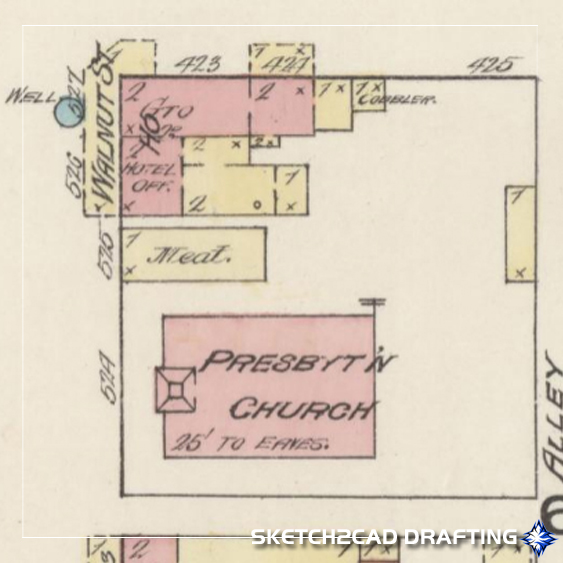
The 1883 Sanborn Fire Insurance Maps offer detailed insights into long-gone structures. These maps include information on distances, types of materials, door and window placements, building heights, fire wall locations, and more. However, as with any sketch, the scale should be interpreted with caution. While distances are noted, it’s clear that some measurements—like moving a 12-inch thick solid brick wall by two and a half feet—don’t reflect actual changes, but rather shifts in mapping conventions. It’s also important to recognize that the numbers outside each building represent the addresses used in 1883, which differ from today’s numbering system. Around 1898, the city updated its addresses, so, for example, what was listed as 525, 526, and 527 in 1883 would correspond to 120, 122, and 124 by 2005.
1883: Southwest Elevation
Situated along North Walnut Street and facing northeast, there is a small, detached, single-story wooden building topped with a shingled pitched roof. On the Sanborn Map, this structure is marked in light yellow, features the number ‘1’ in the upper left corner, and an ‘x’ at the bottom left. The 1883 Sanborn Map identifies it as a ‘Meat’ establishment, indicating it served as a butcher shop.
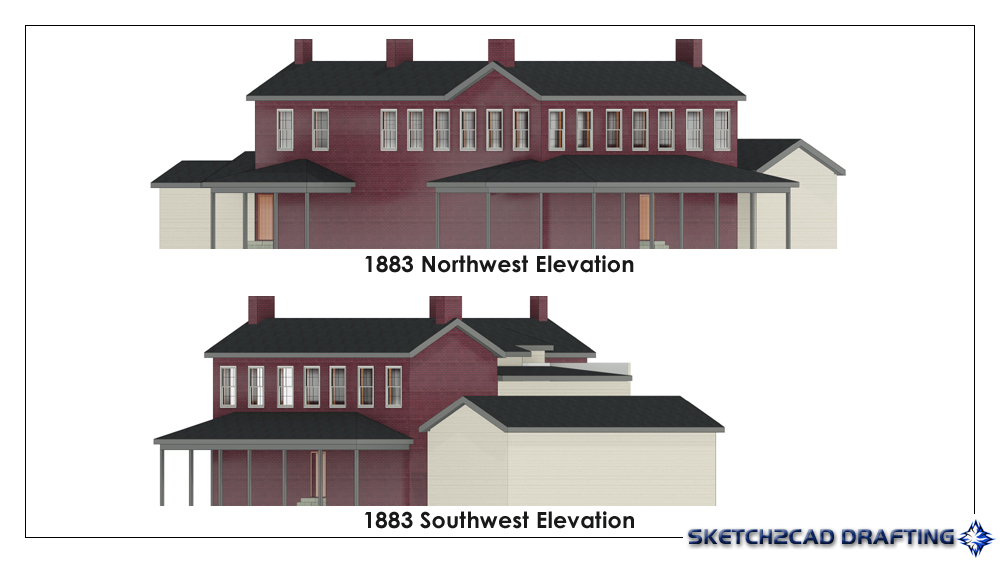
The Walnut Street Hotel building sits apart from its neighboring structure, separated by a narrow alleyway running to the east. This two-story brick structure wraps around the corner of North Walnut Street and Sixth Street in an ‘L’ shape. At the southern end lies The Walnut Street Hotel Office, which opens directly into the Grocery Store located at the corner. A modest set of steps marks where the original exterior door to the Hotel Office once stood—roughly at the center of the Walnut Street façade. This spot aligns with the location of today’s upstairs apartment access door. Both street-facing sides feature a wrap-around, wood-framed porch topped with a sloped shingle roof.
The Walnut Street Hotel building sits apart from its neighboring structure, separated by a narrow alleyway running to the east. This two-story brick structure wraps around the corner of North Walnut Street and Sixth Street in an ‘L’ shape. At the southern end lies The Walnut Street Hotel Office, which opens directly into the Grocery Store located at the corner. A modest set of steps marks where the original exterior door to the Hotel Office once stood—roughly at the center of the Walnut Street façade. This spot aligns with the location of today’s upstairs apartment access door. Both street-facing sides feature a wrap-around, wood-framed porch topped with a sloped shingle roof.
1883: Northwest Elevation
From the vantage point across the street, just in front of the Samira restaurant in todays landscape, you can see the corner of the building clearly. Moving along the wrap-around porch, you’ll notice there’s an additional porch attached to the two-story section of The Walnut Street Hotel. It’s likely that a door existed here—probably the same entrance that remains at the back of the building today. Even in an 1883 view, this entrance would have served the rear tenant of The Walnut Street Hotel, or 427 Sixth Street.
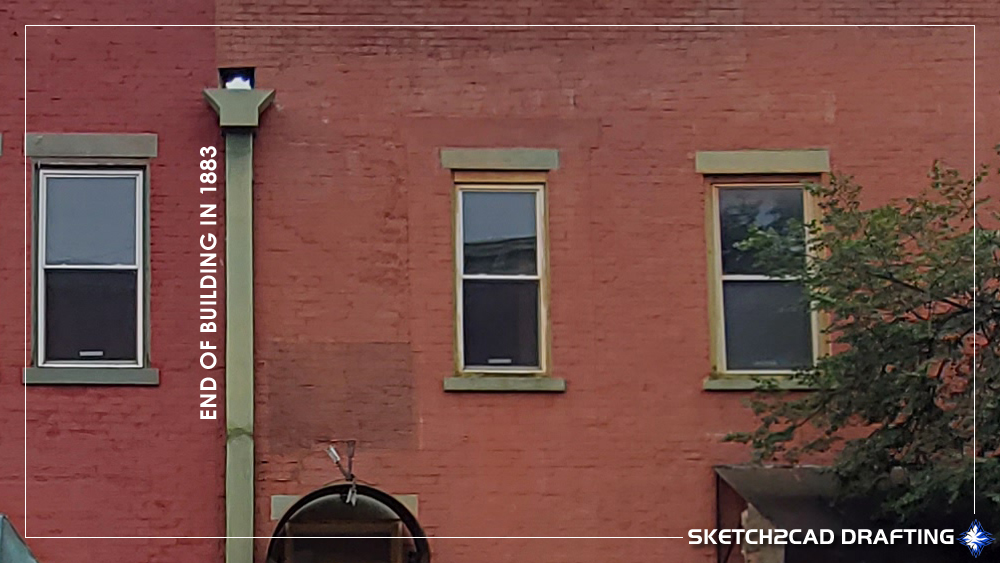
For the most part, the upper floor features tall window openings that are evenly spaced around the building’s facades—until you reach the rear section on Sixth. Here, the two upper-level windows are set apart at different intervals compared to those at the corner. While on-site gathering measurements, we also took numerous reference photos. If you look closely at the back window area, you’ll notice that the brick beneath the exterior paint is different—evidence that there was once a door here that has since been filled in. This doorway would have provided access from Sixth Street to the upper floor, likely via an exterior staircase and possibly a deck above the roof line. Although the Sanborn Maps don’t indicate a door at this location—or any windows for that matter—they do show shingles covering a wood-framed area, but make no mention of a deck. At some point, a large, tall doorway was replaced with a window.
To the east along Sixth Street stood a modest, single-story wooden building with a sloped shingle roof. Just beyond that, another smaller wooden structure housed the cobbler’s shop—a place where a cobbler, someone skilled in repairing shoes, worked to mend worn soles and restore footwear for the local community. Keep in mind this is the 1800’s, a person typically wore their shoes out and was more economical back then to just repair them by a local craftsman than to buy a new pair. If a lady broke the heel on her boots, there’s a person down the street to fix it quickly and you’re good to go!
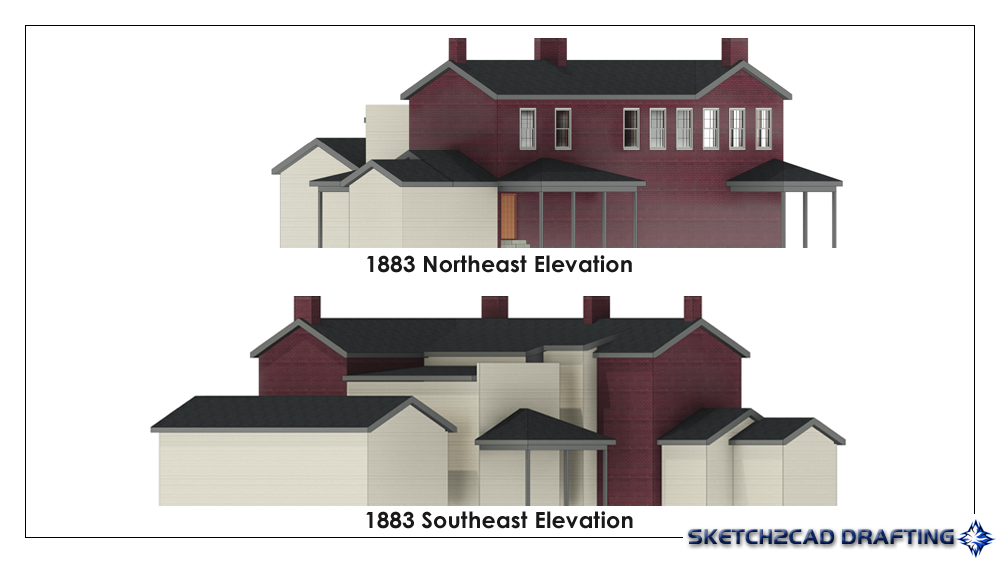
1883: Southeast Elevation
On the southeast side, at the rear of the building, stood four wood-framed structures attached to The Walnut Street Hotel. Directly behind the hotel office was a two-story section with a flat roof. In my representation, I’ve imagined this roof sloping toward the alley rather than the back of the building, which seems logical—if the detached building could drain rainwater into the alley back then, it’s reasonable for us to do the same now. At the very back of the two-story framed section, there was a wooden framed covered porch, likely serving as a rear entrance for hotel staff and deliveries.
I’d like to highlight an unusual feature on the southeast elevation. Between the two-story framed section with its small rear porch and another small two-story wood-framed portion attached to the main brick structure, there’s a narrow corridor. By around 1877, this corridor was open at ground level but enclosed above. It’s a quirky detail that stood out during inspecting the later maps closely.
Walnut Street Hotel: Evolution of Tenants Over Time
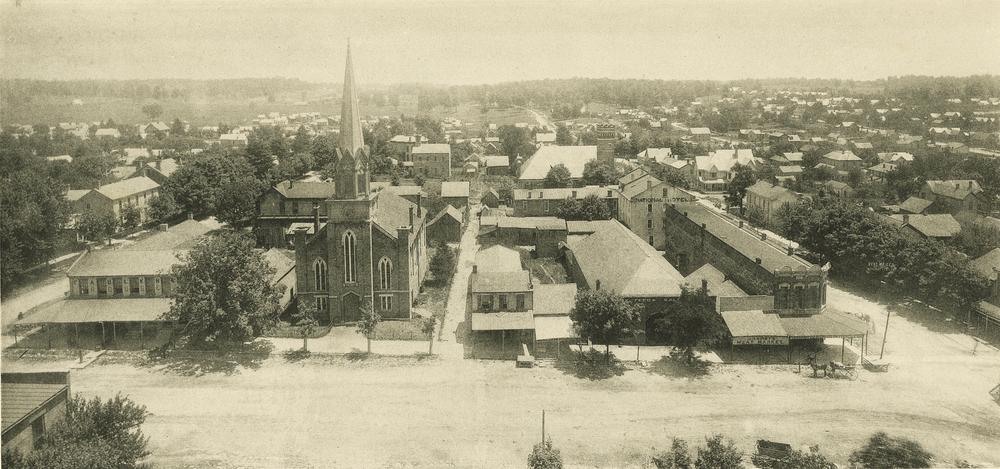
Photo courtesy of Indiana University Archives
1800’s: Early Tenants
- 1854 Mr. & Mrs. Jonathan Moore
- 1883 Unknown (Walnut Street Hotel)
- 1884 Jimmie C. Robinson & his sisters (Walnut Street Hotel/House)
- 1887 Drury J. Hodges (Commercial Hotel)
- 1887 Mrs. Henry Rott & Sue Bailey (Commercial Hotel)
- 1887-1888 Harvey Baker (Commercial Hotel)
- 1888-1890 Francis Marion Faulkner (Commerical Hotel)
- 1891 Mr. Hansford Brown
- 1892 Mrs. John Stockwell
- 1895 John T. Bundy
- 1898 Susan Melissa Faulkner (widow of Francis Marion Faulkner)
Mr. & Mrs. Jonathan Moore
Little is known of Jonathan Moore. In February of 1854, Jonathan S. Moore had an advertisement in the paper requesting the need for dried peaches and wheat. Fast forward a couple months to April 1854, Dr. D.R. Malone, who was an eclectic Physician and Surgeon had his office in the same building of that Mrs. Moore occupied, no mention of of her husband at the time. While it wasn’t located, Jonathan Moore whom was either ran a grocery or a dry goods business died.
In May of 1854, Jonathan Moore now deceased, there was a private sale for in-lot #191 to pay for the debts of Mr. Moore. The information stated that there was a large brick building for the building he occupied on the square.
Unknown
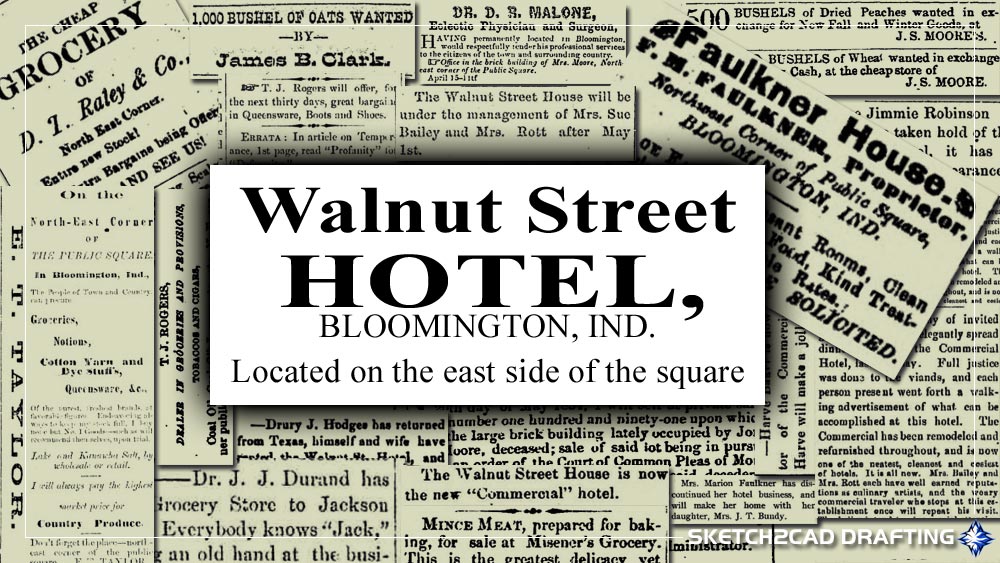
I have yet to locate any proprietors/operators of the facility this far back, when you get back this far it a literal ghost town as far as information goes. However, there was a large advertisement located in the Bloomington Telephone newspaper on 09/29/1883 that names the structure as the Walnut Street Hotel.
James Cameron Robinson
Affectionately known as “Jimmie,” was a prominent figure in the local business community, having served as a clerk for both John K. Anderson & Co. and Raley & Co. In addition to his clerical roles, he operated a small grocery store on the west side, further cementing his reputation as an industrious and enterprising individual. On January 20, 1883, Robinson married Lillie Faris, the daughter of James Faris. Despite thorough research, information regarding his sisters has not been found. During the time James and his sisters ran the facility, the structure was referenced to as the Walnut Street House from my findings.
Drury J. Hodges
Mr. Hodges managed the Walnut Street Hotel for a short period, during which Harvey Baker served as the overseeing landlord. Beyond his brief stint in hospitality, Hodges was also a member of Company C, 97th Regiment of the Indiana Infantry, reflecting his service during a significant chapter of American military history. Tragically, his life was cut short by consumption, known today as tuberculosis, which claimed him following his contributions both as a hotel manager and as a soldier. During the time Drury ran the facility, the structure was renamed from the Walnut Street House to the Commercial Hotel from my findings.
Mina Rott & Sue Bailey
Mina Rott was married to Henry Rott but divorced in 1887. Mina was recognized as the oldest baker in town and operated a bakery and confectionery from her parlor, situated on the east side of the public square, one door south of the Presbyterian Church. The present-day location of her shop would correspond to the building now housing the Caveat Emptor bookstore as of 2025. Mina Rott offered an array of confections, oysters, and seasonal ice cream.
In 1887, Mrs. Sue Bailey ended her partnership with Mrs. Rott to take up employment at the National Hotel. Subsequently, she became associated with the Beta Theta Pi fraternity, serving as matron. It doesn’t seem that long ago that we were a part of the renovation and addition to that structure. Reflecting back highlights how connected our community truly is throughout the passage of time.
Harvey Baker
Harvey Baker sustained injuries during the Civil War when he was struck by a hail of bullets, which left him unable to do physically demanding work. Formerly serving as a deputy sheriff in Monroe County and working as a postal carrier, he later became involved in local politics with the Republican Party and was appointed constable by the county commissioners. Once a resident of the bustling town of Stanford, Indiana, Baker eventually made his home in Martinsville, Indiana.
Francis Marion Faulkner
To say the least, a passionate and influential figure in the local hospitality industry. My journey into the history of the Walnut Street Hotel began with the discovery of an early photograph from 1891, which prominently displayed the words “Faulkner House” on the Walnut Street facade. This intriguing detail sent me down a fascinating rabbit hole of research. Francis, grab the reins and let’s get this buggy rollin’
Contrary to popular belief, what many refer to as the “Faulkner House” or “Faulkner Hotel” is, in fact, the Walnut Street Hotel. The misnomer likely stems from Faulkner’s significant involvement and the visible signage, but historical records clarify the true identity of the establishment. Unraveling these details not only shed light on the legacy of Francis Marion Faulkner but also revealed the layered and sometimes misunderstood history of one of the area’s most storied hotels.
Francis Marion Faulkner was born in 1831 in Ellettsville, Indiana. On March 20, 1852, he married Susan M. Curtis in Owen County, beginning a new chapter in his life. The earliest recorded mention of Francis appears on May 19, 1869, when a document notes that F.M. Faulkner of Ellettsville sold his hotel property to P.W. Purdue of Salem, Indiana, and subsequently purchased the Barnes House in Bedford, Indiana. There was no mention of the hotels location or name, just that he had one evidently and sold it. Prior to this transaction, there seem to be no archival records of his activities, so our story of Francis truly begins at the age of 38.
Francis and Susan went on to have children, including their daughter Sarah Anne Faulkner, who would later marry John T. Bundy of the Bundy Hotel on Kirwood Avenue.
Together Francis & Susan had (6) children:
Sarah Anne (Faulkner) Bundy (1854-1930)
Mary Alice Faulkner (1855-1929)
Martha Sophrora (Faulkner) Peek (1861-1916)
William L. Faulkner (1861-1862)
Hannah Laurie (Faulkner) Carr (1865-1945)
Infant Daughter Faulkner (Died at birth 1857)
As a hotel proprietor in Bedford during the 1880s, Francis became a central figure in the local community. In 1881, he intervened in a racial dispute at his establishment, earning recognition from supporters of Frederick Douglass for his fair-mindedness and leadership. That same year, he served as the clerk of the National Hotel on Kirkwood Avenue and oversaw the construction of a new bowling alley, reflecting his commitment to enhancing the city’s amenities.
Among the many colorful stories about Francis is one particularly memorable tale: on the Fourth of July, he once brought a so-called “man-eating” bear to Indian Springs. The townspeople, uncertain about the bear’s temperament, climbed into the treetops and refused to come down for hours, only to later realize the animal posed no threat. The image of entire towns hiding in trees is both amusing and vivid, highlighting the unique character of life in those days. Imagine if such an event took place today—with Kirkwood Avenue closed to traffic for outdoor dining, a bear on the scene would surely prompt a call to the National Guard!
Eventually, Francis relocated to Indian Springs, where he continued his career as a hotelier, further cementing his reputation as a dynamic and enterprising figure in Indiana’s history. Onward Mr. Francis onward…
In 1885, Francis took a another step in his career by renting the Hyatt House owned by Henry H. Hyatt in Washington, IN., marking another entry into the hotel business. The Hyatt House was a massive Italianate styled brick structure was formerly at the intersection of Main Street and SE 4th Street on the southeast corner where the Stitching Post now operates. As a child growing up I recall the older generation talking about this hotel, though it was never present in my years, it was hard to grasp the scale of it at that time. Three years later, in 1888, records show him here in Bloomington, where he was purchasing furniture and fixtures for the Walnut Street House. He soon took over the management of this establishment, overseeing its operations until around 1891, when Mr. Hansfurd Brown succeeded him as manager.
By 1892, Francis had set his sights on a new venture. He leased, opened, and took up residence in a newly constructed 21-room hotel in Stinesville, Indiana. This hotel was owned originally by Jeanie Easton and still stands at the intersection of Main and Railroad Streets on the southwest corner. However, his time there was brief, and by 1893, he returned to Bloomington to operate from the freshly built Stockwell Building, which had risen from the ashes after a devastating fire wiped out an entire city block—a dramatic chapter in the city’s history. There’s a small section towards the bottom of this mile long page about all the fires relating to the individuals that ran the Walnut Street Hotel.
Later that same year, Francis decided to retire from the hotel trade and instead focus his energies on managing his farm, located west of Ellettsville. One of the last newspaper mentions of him comes from 1894, when he and Gil Faris were spotted riding through Ellettsville heading west—a small event, but newsworthy in the eyes of the community at the time. Wooo Francis Wooo this is my stop, thanks for the ride!
Francis’s life came to a close on April 27, 1895. He was laid to rest in the Faulkner Cemetery in Spencer, Indiana. His grave marker, a striking hand-carved limestone tree trunk, stands as a testament to his legacy. It is inscribed with the name of his wife, Susan Melissa Faulkner, though she was not buried beside him. The cemetery is situated in Clay Township, Owen County, on the north side of Gilmore Road, approximately a quarter of a mile east of Bakers School Road.
The story of Francis is one of resilience, entrepreneurship, and a deep connection to the communities he served—a legacy in the fabric of Indiana’s history.
Hansford Brown (a.k.a. Mr. Brown)
Although little is known about Mr. Brown, several notable episodes mark his time in the community. After Francis Faulkner sold his hotel furniture to Mr. Brown and wished him well, Brown took over and sought to improve the guest experience by installing American Window Ventilators, enhancing comfort for travelers passing through. Unfortunately, in 1891, he contracted typhoid fever, which led him to step away from his duties.
Later that year, as John Stockwell assumed management of the hotel, Mr. Brown rented the Wilson House located on East 9th Street, suggesting he remained engaged in local affairs. In 1892, Mr. Brown briefly owned the McGinnis livery stable but soon after sold it to Helton Panley. Not one to remain idle, he subsequently purchased Andy Hazel’s express wagon and team, indicating his continued involvement in local business ventures.
Beyond his professional activities, Mr. Brown was a family man who cherished time spent with his wife, Laura, and their daughter, Louise. Though much of his life remains undocumented, these fragments reveal a man dedicated to both his work and his loved ones, leaving a subtle but distinct impression on those around him.
John T. Bundy
John T. Bundy was the proprietor of the renowned Bundy Hotel, situated at the prominent northwest corner where Kirkwood Avenue intersects with Washington Street. Over the years, this notable establishment underwent several name changes that reflected the evolving history of downtown Bloomington. Originally known as the Bloomington House, it was subsequently rebranded as the National Hotel, and later, in 1913, it became Hotel Kirkwood, marking a new era in its service to the community.
The site’s legacy as a local landmark did not end with its days as a hotel. In the years that followed, the historic building gave way to the construction of the Old National Bank building, continuing its tradition as a central hub in the cityscape. Most recently, in 2015, the ground floor of this location became home to a CVS Pharmacy, blending modern conveniences with the rich tapestry of Bloomington’s architectural and commercial heritage.
Susan Melissa Faulkner
The widow of Francis Marion Faulkner, listed above, played an integral role in her husband’s hotel enterprises throughout their marriage. She was not only his partner in business but also managed many daily operations, particularly overseeing the maintenance of the hotels and the preparation of meals for guests. After Francis’s passing, Susan continued her involvement in the hospitality industry, managing the Walnut Street Hotel and later operating the Bundy/National House on Kirkwood as a boarding house.
Born Susan Melissa Curtis on February 23, 1834, in North Carolina, she dedicated much of her life to both family and business. Her leadership and skills made a significant impact on the local hospitality scene in Bloomington, Indiana. Susan passed away on January 13, 1919, at 84 years of age, succumbing to paralysis. She rests in a mausoleum at Rose Hill Cemetery in Bloomington, distinctly interred apart from her late husband (interpret that as you will). Her legacy endures as a testament to her industrious spirit and commitment to her community.
The records for the early tenants for the whole Walnut Street Hotel structure in the 1800’s up to 1899 are as follows with the current building dates:
120 North Walnut Street
1871-1873 Banta & Whitaker Undertaking
1883-1899 Butcher Shop (B.L. Cron & Jim Campbell owners)
1889-1892 Roseberry and Cron Butcher Shop (A.Link Martin owner)
1893 Hancook Meat Shop
1898 Hill & Rawitch Clothing Store (Edwin C. Hill owner)
122 North Walnut Street
1847-1883 The Walnut Street Hotel Office
1887-1892 The Walnut Street Hotel Parlor
1898-____ Gentlemen’s Furnishing
124 North Walnut Street
____-1854 Mr. & Mrs. Jonathan Moore (grocer or dry goods)
____-1871 Grocery Store (Dr. J.J. Durand owner)
1869-1870 E.T. Taylor Grocery & General Store (E.T. Taylor owner)
1870-1872 T.J. Rogers Grocery Store & General Store (Thomas James Rogers owner) (sold to S.M. Thrasher & Son. They relocated to S. College Ave. leaving space @ hotel vacant)
1872-1873 Grocery Store (Jackson Misener owner)
1881-1883 Wooley’s Grocery
1883-____ D.T. Raley & Co. Grocery
____-1885+ Meadows & Payne Meat Shop (rear of grocery store)
188_-1887 James B. Clark Grocery (James Barkley Clark owner)
1887-1899 The Walnut Street Hotel Office
1900’s: Changes in Business Landscape
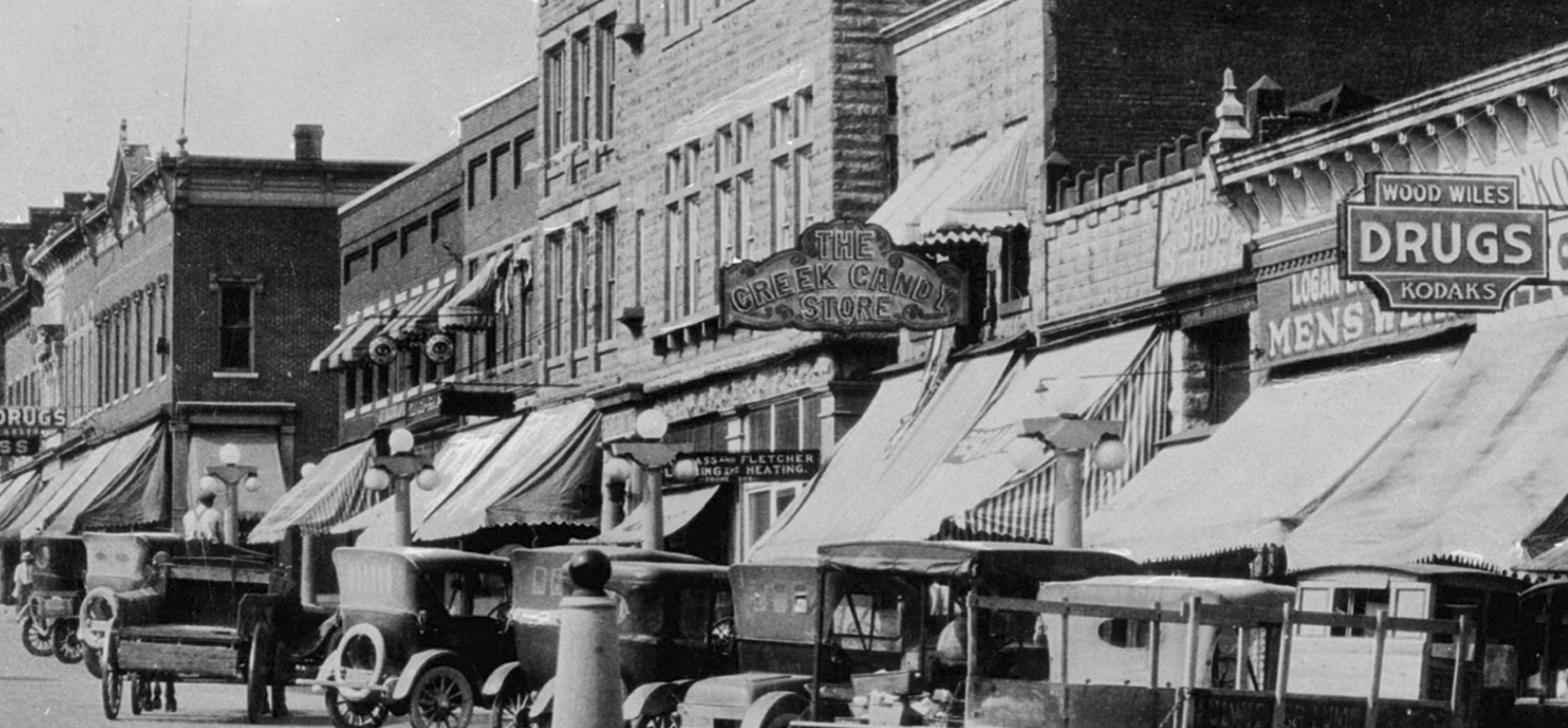
Photo courtesy of Indiana University Archives
The variety of businesses that have occupied these buildings over time truly defies any simple classification—unlike a place such as The Walnut Street Hotel, whose purpose was always clear. Take 122 North Walnut Street as an example: at different points in its history, it has housed a pharmacy, a boot store, a shop specializing in baby clothes, and even a boutique for women’s lingerie. How could anyone possibly categorize that with a single label?
Given this eclectic turnover, the list below is a careful simplification, presenting the different types of businesses by year for each address. This approach helps to bring some order to the fascinating and sometimes chaotic history of these locations.
Before we explore the building’s notable history during the early 1900’s, let’s shine a light on the people who gave it purpose: the employees, to me this is a very important subject based on my career. While buildings are often remembered by the famous names of their architects or builders, it was the everyday employees who truly brought the space to life. They aren’t just a footnote; they are the heart of the business, and without them, the building is nothing more than an empty shell.
Although it’s impossible to include every person who worked in these facilities, a list of those we were able to identify is provided below.
Alfred Grindle Architect
Mary L. Eller (draftsman)
City Book Store
Claude Steele (manager)
Hall Electric Company, Inc.
Carles E. Hall (president)
Curtis B. Hall (secretary treasurer)
Benjamin B. Hall (vice president)
Josephine E. Hall (bookeeper)
Globe Clothing Company
Elmer L. & Henrietta Bender (owners)
Lillian L. Holler (bookeeper)
Albert Butcher (sales)
Maurice H. Parks (assistant manager/deliveries)
R & S Boot Shop
Ross A. Richardson (owner)
Solomon W. Schwartz (owner)
Charles D. Smith (sales)
Myrtle Wilkinson (sales)
Don F. Hunter (sales)
Raymond D. Jones (sales)
The Vogue
Louis (Caroline) Becovitz (owners)
Analie Hepley (assistant buyer/sales)
Bertha Cunningham (sales)
Georgia Dillard (sales)
Grace L. Hall (sales)
John W. (Ella Mae) Patton (sales)
Pauline Talbott (sales)
Dortha R. Walker (sales)
Janet L. Seward (sales)
Myrtle Wilkinson (sales)
Eunice J. Hollingsworth (alterations)
Edna Hendrix (seamstress)
Isabella Mitchell (seamstress)
Mrs. Mary E. Hardy (seamstress)
Mary Sanborn (seamstress)
Verna A. Goodall (seamstress/sales)
Mary S. Kutche (alterations)
Jessie A. Mercer (bookeeper)
Mary Matthews (bookeeper)
Robert DeLigter (bookeeper)
George E. Fearman (janitor)
Jacob L. Patton (chauffeur/janitor)
Rexford C. Fox (janitor)
The records for the tenants for the whole Walnut Street Hotel structure in the 1900’s up to 1999 are as follows with the current building dates:
120 North Walnut Street
1907-1926 City Book & Music Store (Nicholas O. Pittenger & Emma G. Booe owners)
1926-1974 The Vogue (Clothing store. Original owners Louis & Caroline Becovitz, operated by son Louis C. Becovitz and his wife Jean from 1960-1968 when purchased by Wible & Adams)
1974-2003 Perennial Designs, Inc. (Michael Pollack owner)
122 North Walnut Street
1900-1902 Racket Store (Notions, Hardware, Queenswear, Stationary, Etc. – C.E. Martin & R.H. Greenslade owners)
1907-1918 Joseph C. Vermilya’s Pharmacy
1912 M.E. William’s (name written on canopy of photo)
1920-1932 Walk Over Boot Shop (Ross A. Richardson owner)
1934-1984 R&S Boot Shop (Ross A. Richardson & Crudence C. Spencer owners)(closed due to fire on Oct. 15, 1984 in adjacent building)
1985-1988 Cotton Beginnings (Babywear)
1990-1997 Bare Essentials, Etcetera (Women’s Lingerie Store – Michelle Martin-Coleman owner)
1997-2001 Bare Essentials
124 North Walnut Street
1900-____ Walnut Street Hotel (Susan Faulkner owner)
1909-1930 Globe Clothing Company (Elmer L. & Henrietta Bender owners)
1931-1960 Hall Electric Company, Inc. (Charles E. Hall owner)
1960-1982 Neumode Penny Pincher (Merle Hetherington owner)
1982-1983 Proper Perspective Photographic Studio (Business previously located at 1022 N. College Avenue)
1984-1986 Perennial Discounts
1989-2003 Boca Loca Beads (1989-2003) (Jari Sheese owner)
1960’s: Busy Streets and Vibrant Communities
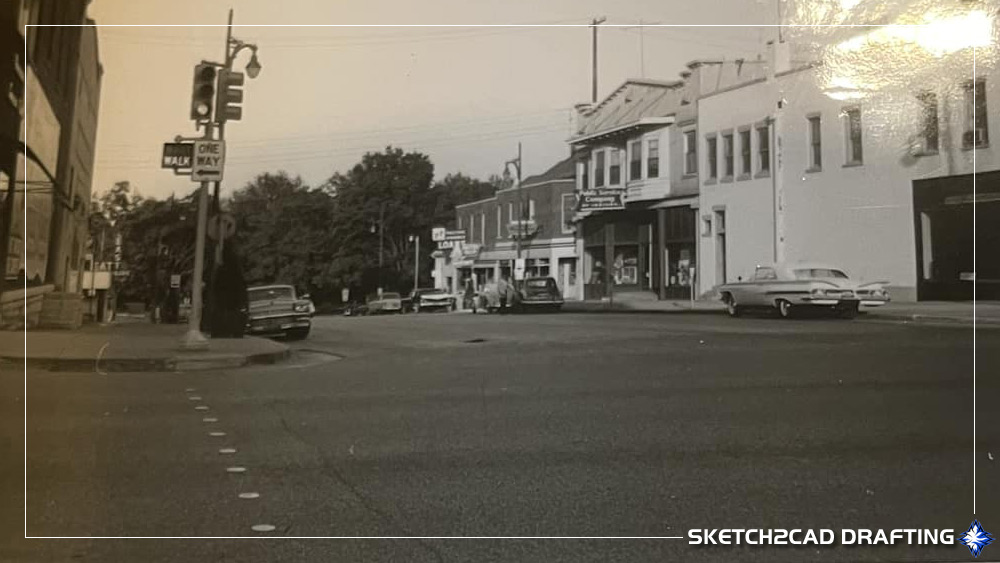
Photo courtesy of The Dennis Barrow Collection
The photograph above captures the view looking east from the intersection of Walnut Street and Sixth Street in 1960. One way to identify these images is by examining the vehicles featured; many are from the 1950s, but the car in this photo is a 1960 Chevy Impala convertible, recognizable by its sweeping rear design. Looking down Sixth Street, you can spot the historic Roger’s building directly behind Hall Electric’s white-painted brick storefront. At that time, there were no additional doors or window openings between the rear entrance and the corner storefront glazing. The rest of the businesses are more visible in the next image.
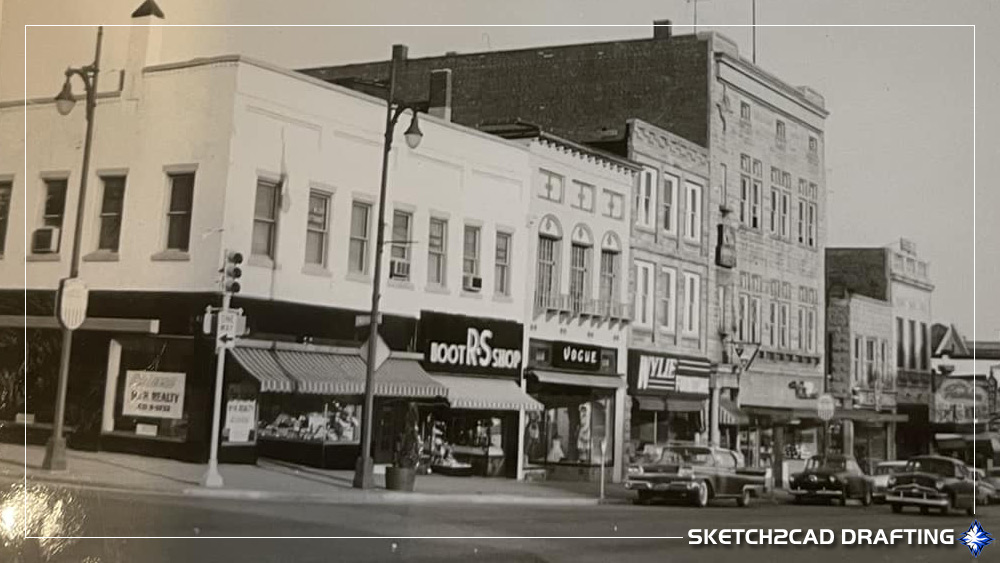
Photo courtesy of The Dennis Barrow Collection
Moving around to the facade facing the courthouse square, you gain a clearer sense of the businesses and buildings as they appeared at the time. Hall Electric Company, R.S. Boot Shop, and The Vogue are all visible in this photograph. In the storefront window on the corner of Sixth Street, a realtor’s sign is displayed, complete with a contact number. Hall Electric’s final year at this location was 1960, the Chevy Impala parked on Sixth Street, and the omission of their company signage from the Sixth Street facade confirms the photo’s date. One notable change over the years is the city’s approval of awnings above store entrances, which weren’t present back then. The prominent business signs that once hung from the building exteriors have also long disappeared.
2000’s: The Modern Era
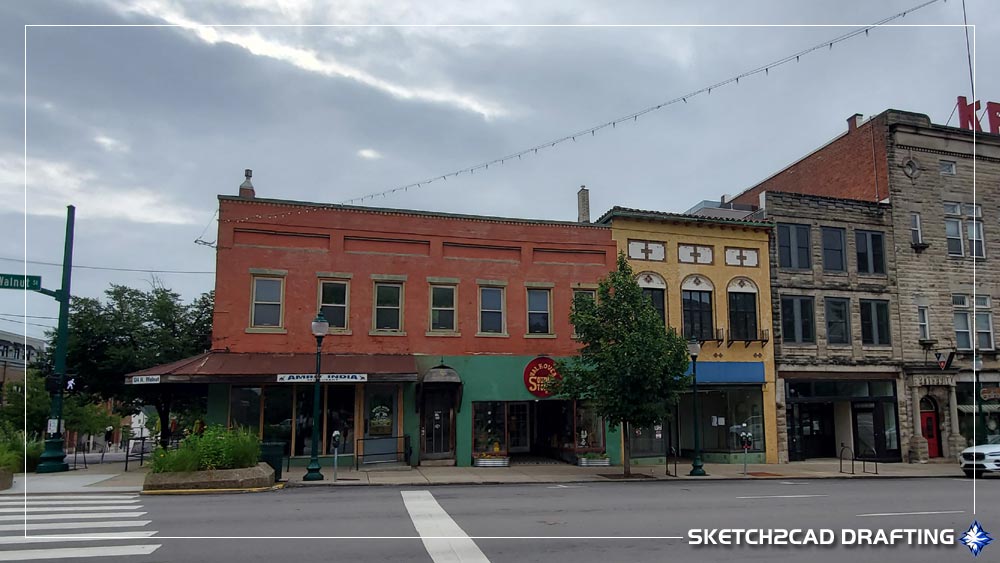
As the twentieth century turned and a new era unfolded, the landscape of local commerce evolved with fresh business models and steady economic advancement. The fears that once loomed large—first with large factory manufacturing exiting the country, the uncertain threats of Y2K at the millennium’s edge, and later with the global disruptions brought by Covid-19—cast shadows of doubt on the future of small businesses everywhere. Yet, in the face of these challenges, the heart of downtown has proven remarkably resilient. The storefronts that line its streets continue to welcome customers, offering both a sense of continuity and the promise of renewal. Through adversity, these shops have adapted and thrived, serving as living proof of a community’s enduring spirit and unwavering commitment to its local economy.
The records for the tenants for the whole Walnut Street Hotel structure in the 2000’s up to 2025 are as follows with the current building dates:
120 North Walnut Street
1974-2003 Perennial Designs, Inc. (Michael Pollack owner)
2003 Petsalive (Temporary pop-up store for local pet adoptions)
2004-2005 Italian Stile (Valeria & Elio Russo owners)
2005-2013 Superior Shoes (Bob Fryfogle owner)
2014-2025 Vacant
122 North Walnut Street
1997-2001 Bare Essentials
2002-2009 Natural Elements (Ryan Dauss & Emily Crum owners)
2009-2023 Global Gifts (2009-2023)
2024-2025 Walkover Sounds and Stones (LP Records & CD Store – Will Bewley owner)
124 North Walnut Street
1989-2003 Boca Loca Beads (1989-2003) (Jari Sheese owner)
2004-2013 Roots Restaurant (Ryan Dauss, Russel Banks, Jeff Evard owners)
2013-2014 Bombay Cafe’Restaurant
2014-2025 Amrit India Restaurant
The City Fires
Walnut Street Hotel Fires
08/12/1893:
A small fire was started by a defective kitchen flue in the rear of The Walnut Street Hotel but was put out quickly by the fire department across the street.
08/13/1893:
A fire started by someone using a rag saturated with coal oil and thrown on the roof the Hancook Meat Shop.
06/14/1899:
A fire started at the Kerr meat market, that was south of the former Presbyterian church. Wind fanned the flames across the alley to the Presbyterian church and ignited the cornice. The fire department put out the fire on the cornice and went back to working on the meat market when a flame shot up the copula of the church. As the fire department started fighting the fire at the church again, they were forced to retreat as the tower became weakened by the flames. After about an hour, the big steeple carrying the bell fell to the alley to the south and the church was considered lost. The fire department then focused on saving the Walnut Street Hotel building and succeeded.
10/15/1984
A contractor working on renovating the upstairs area heard some noise before discovering the fire and witnesses seen people outside the building when the fire began. The fire started in the rear storeroom of Perennial Designs in a rack of clothing near the door that opens to Sixth Street. Extents of the fire were contained to the rear stairwell and a lot of smoke damage throughout the entire structure. The arsonist was never caught to my knowledge.
Fifth & College Street Fire
08/21/1872:
Tthe entire city block caught fire and burnt between Kirkwood Avenue (5th Street), College Avenue, and Railroad Street down to the alley before the Orchard House. To give you a better idea and scale of the fire and it’s current location in 2025 is considering there’s no railroad depot anymore, it’s the entire Chase Bank building located at College and Kirkwood. From College Avenue on Kirkwood all the way down to Hyatt Place (which use to have a drive up bank teller building out there) and from Kirkwood on South College Avenue down to the alleyway before the building that Bikesmith’s is currenty occupying. Keep in mind this was 1872 and they didn’t have hydraulic diesel powered turbine pumps on those fire wagons of today and was probably a steam powered pump on some wagon wheels.
The fire started in the second story of the northwest building, moved south and east until it completely engulfed the entire block with flames. Business’s include Messrs, Howe and Small, H. Knauer (confectionary and bakery), O. Souder’s saloon, Joseph M. Howe’s frame building on the East occupants were Mike Smith’s barber shop, W.L. Bates shoe shop and C.A. Mobley’s notion store. O’Bold estate’s frame building fronting the railroad depot on the south occupants were Renshaw (Sluss Saloon) and Thomas Carr’s saloon. The brick building on the corner was owned by Joseph M. Howe and James Small. This building was occupied by Mr. Howe as a dry goods store and by J. Glass McPheeters as a Post Office and bookstore. The reason this is important in the story as this event is tied to Francis Marion Faulkner, and no he didn’t start the fire! lol
Early Community Events at The Walnut Street Hotel
Marriages
10/29/1890
Lilly Faulkner, grand-daughter of Francis and Susan Faulkner, was married to Milton D. Wells of French Lick, IN. Reverend Mr. Ross of the Christian Church officiated the ceremony.
10/11/1893
Will “Ditty” Sanders, the hotel porter/janitor to the opera house/manager of a weinerwerst establishment, married Julia Brown, one of the waitresses at the Walnut Street Hotel. Squire Theodore Louded officiated the ceremony.
Community Fund Raisers
06/14/1899
After the fire that destroyed the neighboring Presbyterian Church on North Walnut Street, tenants of The Walnut Street Hotel came together to raise funds for the church by having a market in the corner room. They netted a total of $57, which was beyond their expectations. All raised funds went to the Presbyterian Church for the purchase of a piano for Sunday School.
Clubs and Organization Meetings
Circa 1887
The Indiana University Philosophical Club met frequently on Monday’s in the parlor.
Final Thoughts
I sincerely hope that the legacy of this remarkable structure endures for generations, serving as a beacon of community life on the downtown courthouse square. There is tremendous potential here for local businesses to thrive—an opportunity that remains as vibrant as ever. During my visit to the site for measurements, I was heartened to witness a steady stream of patrons ambling by, many of whom paused to admire the storefronts, proving that the timeless ritual of window shopping is still very much alive.
Despite the ubiquity of smartphones and the pull of digital distractions, the tradition of strolling through downtown, exploring unique shops, and engaging with neighbors has not faded into obscurity. While the scene may not mirror the bustling days of the 1950s—when someone like Hazel might have wandered these streets in search of the perfect new outfit—or the heyday of the Space Port arcade on Kirkwood Avenue across from Sample Gates in the 1980s, downtown still radiates vitality for those who seek it out. Maybe I just dated myself there a little bit.
If you simply know where to direct your peepers, you’ll discover that local shopping is far from a relic of the past. Rather, it is a living, breathing part of our community’s identity—one that invites both nostalgia and new experiences on every corner.
At last, if you’ve followed this journey to its conclusion, I extend my sincere appreciation. This endeavor began with a spark of curiosity about the original owners who constructed this remarkable building, and has since unfolded into countless days of research. My quest for answers has led me down winding paths—some ending abruptly in dead ends, others revealing secrets or sensitive family matters that, out of respect and discretion, I’ve chosen not to share. It’s possible there are a few omissions or mistakes in the narrative, as such complexities are inevitable in an undertaking like this. My primary motivation, however, has always been to streamline the results of my painstaking investigation for the benefit of others who are similarly intrigued.
I owe a debt of gratitude to the staff at The Monroe County Historical Center, Richland Township Trustee’s Office, and City of Ellettsville Town Hall who have lent their insights, resources, and encouragement along the way. For the sake of their privacy, I will not mention names, but their assistance has been invaluable. This project has been a true journey down the proverbial rabbit hole, and it is my hope that the information gathered here serves as a useful and accessible resource for all who share this curiosity. The information provided on this page was also submitted to the The Monroe County Library’s Indiana Room on 08/06/25 to aid in their on-going Hoosier Character project to help minimize their research on this property.