Project Background
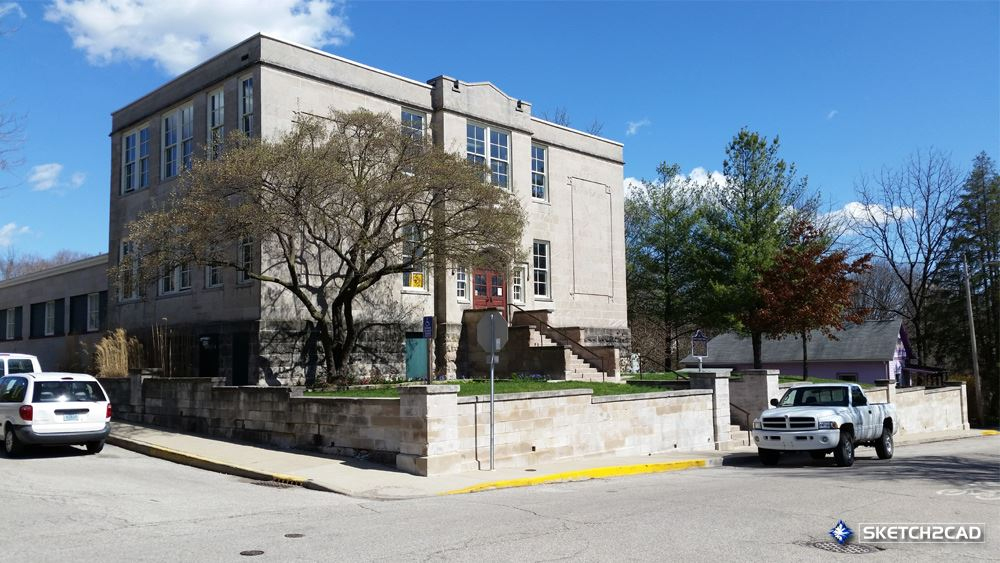
The Banneker Community Center project involved a detailed survey of the existing Indiana limestone retaining walls. The primary goal was to create accurate “as-built” documentation for a local limestone fabrication mill, which would use the information to repair and replace damaged stones.
The project required us to measure every single piece of limestone in the 850-foot-long perimeter wall—a total of around 2,500 stones. Each measurement was taken with extreme precision, accurate to within one-sixteenth of an inch. My experience working in a limestone fabrication mill, where I both cut the stone and created production drawings, made this a very familiar process. Even with that background, the sheer number of pieces to document made it a significant undertaking.
An as-built survey is crucial for restoration projects like this. It creates a detailed and accurate record of the existing structure as it is, rather than relying on original plans that may be outdated or inaccurate. For the Banneker Community Center, this level of precision was essential for several reasons:
- Accurate Replacements: By providing the fabrication mill with measurements down to 1/16 of an inch, they could create new limestone pieces that would fit perfectly into the existing wall, ensuring a seamless repair.
- Cost and Time Efficiency: Without this detailed documentation, the mill would have to spend significant time on-site taking measurements, which would be less efficient and more prone to error.
- Preserving Historical Integrity: The Banneker Community Center is a historic building. By documenting each stone, the project ensures that the repairs maintain the wall’s original character and appearance.
Field Survey
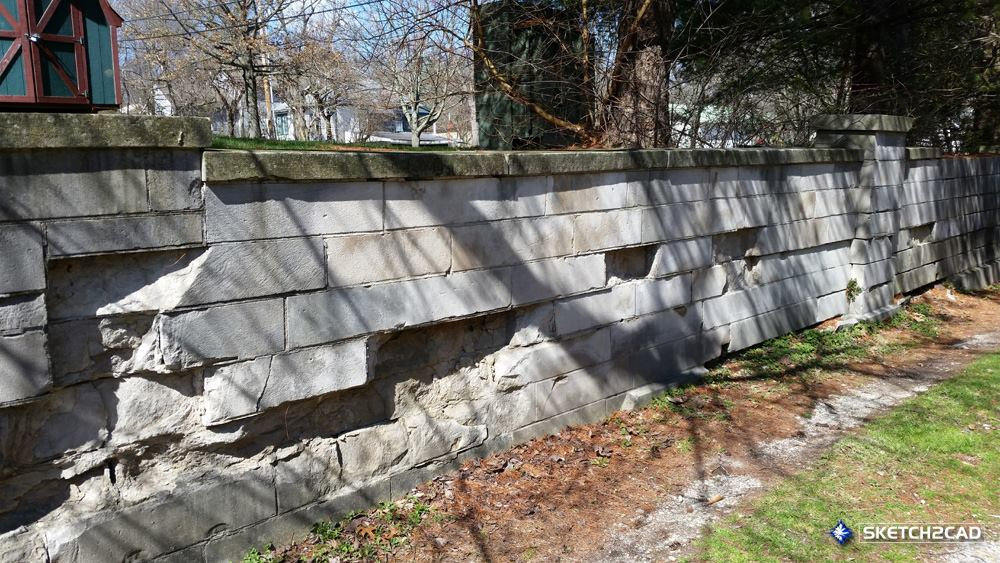
The image above shows the condition of many of the existing limestone blocks surrounding the Banneker Community Center. Each of these stones was carefully numbered and its location was marked on the working drawings. The specific areas of damage on each block were also noted.
Over time, water that seeps in behind the wall can collect and then slowly work its way out through the natural pores of the limestone and the mortar joints. This process, combined with the natural freeze-thaw cycle during the winter, causes significant stress on the stone. As the trapped water freezes and expands, it can create fractures and natural damage in the limestone, leading to the conditions documented in the image.
The damage seen in the limestone is a direct result of the freeze-thaw cycle. This is a natural process where water, trapped within the stone’s pores and mortar joints, freezes in cold temperatures. When water turns to ice, it expands in volume by about 9%. This expansion exerts immense pressure on the surrounding material.
When temperatures rise, the ice melts, and the process can repeat itself. With each cycle of freezing and thawing, the pressure on the stone and mortar increases, causing existing cracks to widen and new fractures to form. This is a common form of weathering and is a significant factor in the long-term deterioration of porous materials like limestone in climates with cold winters.
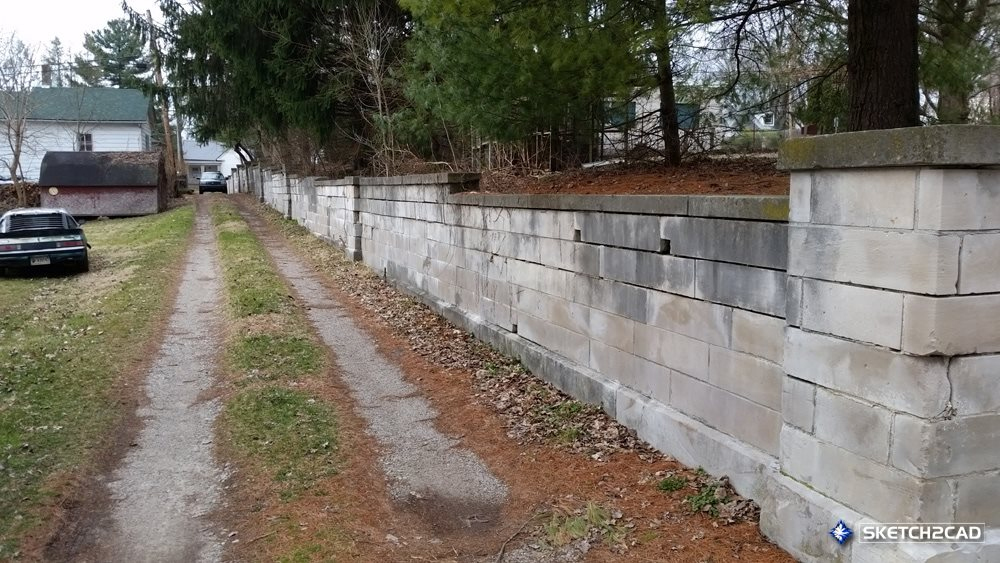
Despite its seemingly straightforward appearance, this wall was particularly difficult to measure accurately. Unlike other walls with multiple large openings for stairs or drives, the complexity here stemmed from different factors.
The true challenge lay in the wall’s extensive length, the numerous offsets that broke up its continuous line, and a significant change in grade across its span. Each of these elements required careful and precise measurement. While the other walls had their own challenges, the combination of these three factors made this specific wall a particularly tricky and time-consuming part of the project to get right. This wall was definitely a peach to measure.