The Structure
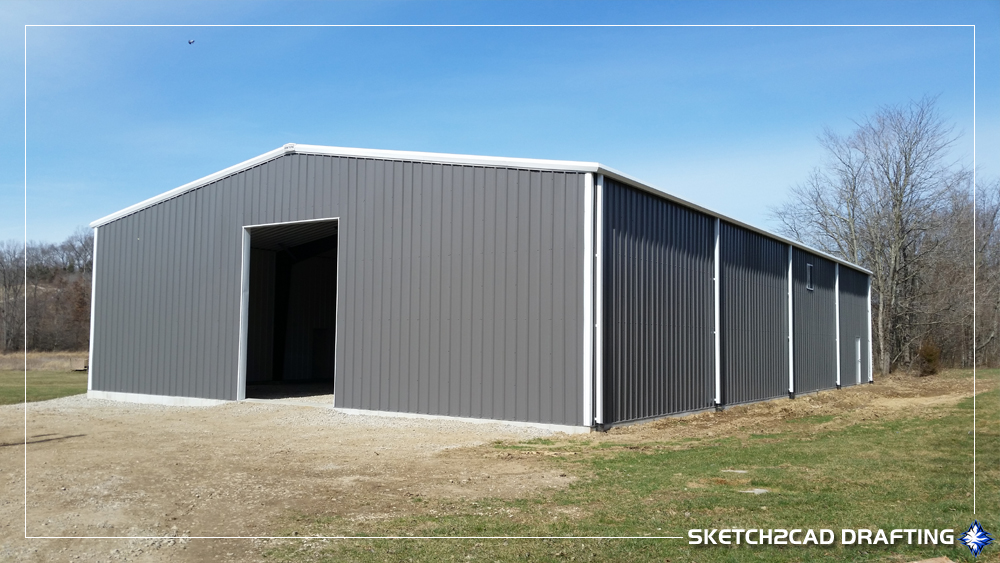
The Carter Road Storage Facility is classified as a pre-engineered metal building, which differs significantly from the typical post-frame, barn-style structure.
Instead of wood trusses, this building uses a multiple-solid-metal bent system designed to extend far beyond the spans commonly achieved with traditional wood framing. The result is massive clear spans and a high level of flexibility in how the interior can be laid out and used.
A typical post-frame barn may span around 50 feet using wood trusses, but it’s important to remember that the primary structure is wood and is therefore 100% combustible in the event of a fire. With a pre-engineered metal building, the only part of the main system that may be combustible in this project is the vinyl-wrapped insulation located within the exterior envelope. The exterior walls and finish materials are metal, and they are commonly supported by long-term warranties—often in the 30–50 year range depending on the specific products selected.
Over the years, we’ve designed 50–100 structures like this for a wide variety of uses, including churches, amphitheater, limestone mills, body shops, sporting facilities, and even residential dwellings.
When selecting this type of structure, it’s essential to plan for the engineering requirements. You will typically need a licensed structural engineer to prepare the foundation drawings. An architect may still support the overall design by enabling submission of architectural layout plans for state approvals and handling elements outside the main structure and foundation itself. In most cases, the architect will rely on a subcontracted structural engineer to provide the foundation plan.
Finally, the foundations for pre-engineered metal buildings are not the same as pole-frame foundations, residential foundations, or many standard commercial foundation systems. They are a different “animal” entirely, and the design must be approached accordingly.
The Design
A pre-engineered metal building can be customized to fit different needs and appearances. For example, you can review design options through Allied Buildings to see the variety available.
For the Carter Road Storage Facility, the design chosen is a simple, traditional frame—appropriate for a storage facility where efficiency and function are the priorities. As stated earlier, the exterior was built using a pre-finished metal panel system. While that approach can make maintenance easier, it is not the only exterior option.
Pre-engineered metal buildings can also be faced with materials commonly used on traditional buildings, including brick, fiber cement, EIFS (E.I.F.S.), and other exterior systems—allowing you to achieve the look you want without changing the underlying metal building framework.
Cost and Construction Considerations
Cost is always a major factor when deciding what type of structure to build.
With a traditional post-frame building, the initial cost may be lower, but there can be trade-offs. Depending on the design, you may need additional bearing locations, the structure is combustible, and labor requirements can be higher.
With a pre-engineered metal building, many components work like a large erector set. Parts are typically shipped by truck to your lot, which can reduce the complexity of on-site assembly. However, a crane is usually required to erect the structure.
It’s also worth noting that, while some people compare equipment needs between building types, pre-engineered metal systems still tend to reduce certain on-site tasks. In post-frame construction, larger spans may require more manual sizing and field cutting, which can increase labor time. Pre-engineered buildings are designed for efficient installation with components manufactured to meet the engineering requirements.
Final Thoughts
If you’re looking for a lot of space that holds up well to weather over time—and offers strong options for future interior changes without major disruption—then a pre-engineered metal building is a great choice in our opinion.